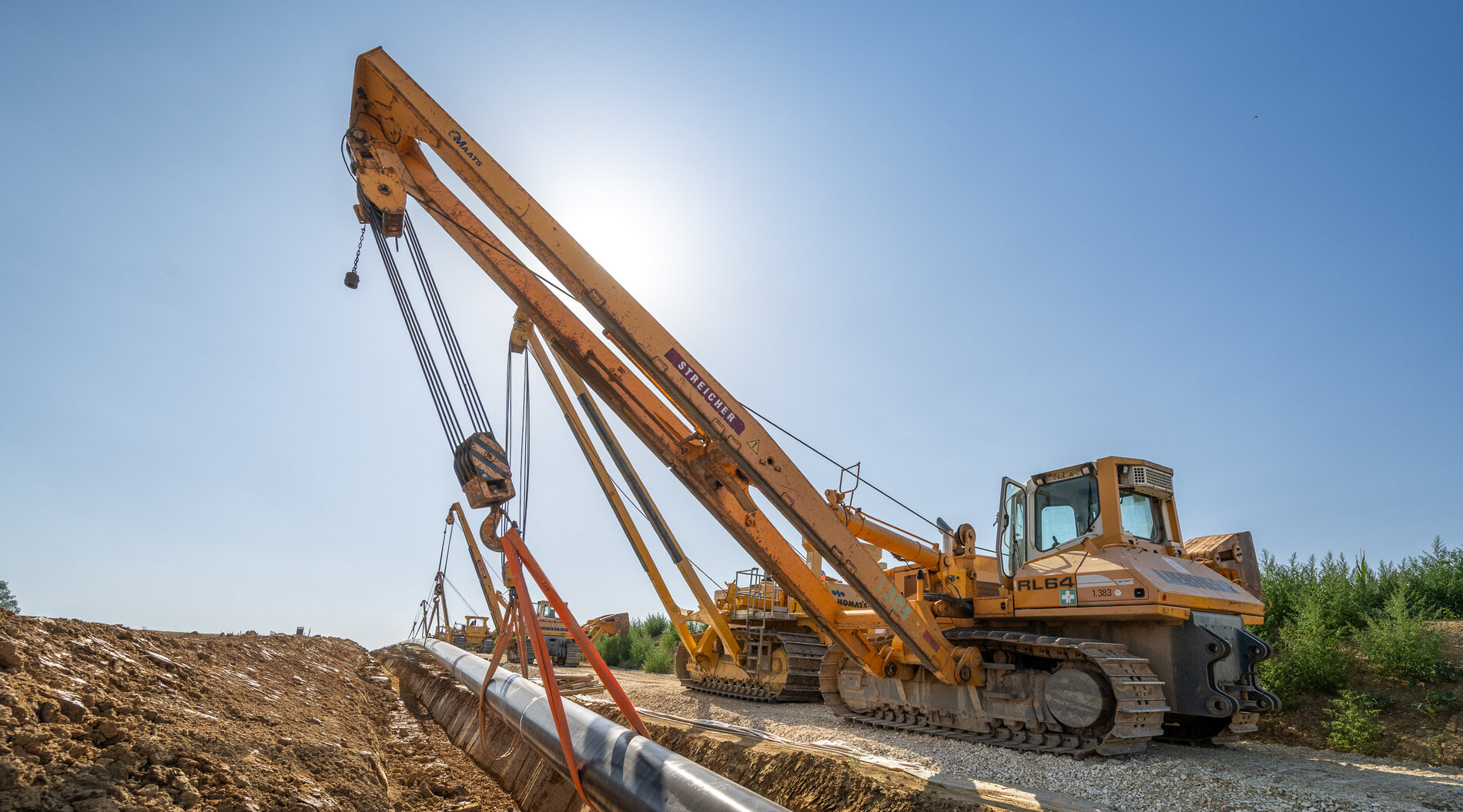

HyPipe Bavaria – The Hydrogen Hub
Hydrogen hub serving import and distribution in the hydrogen core network
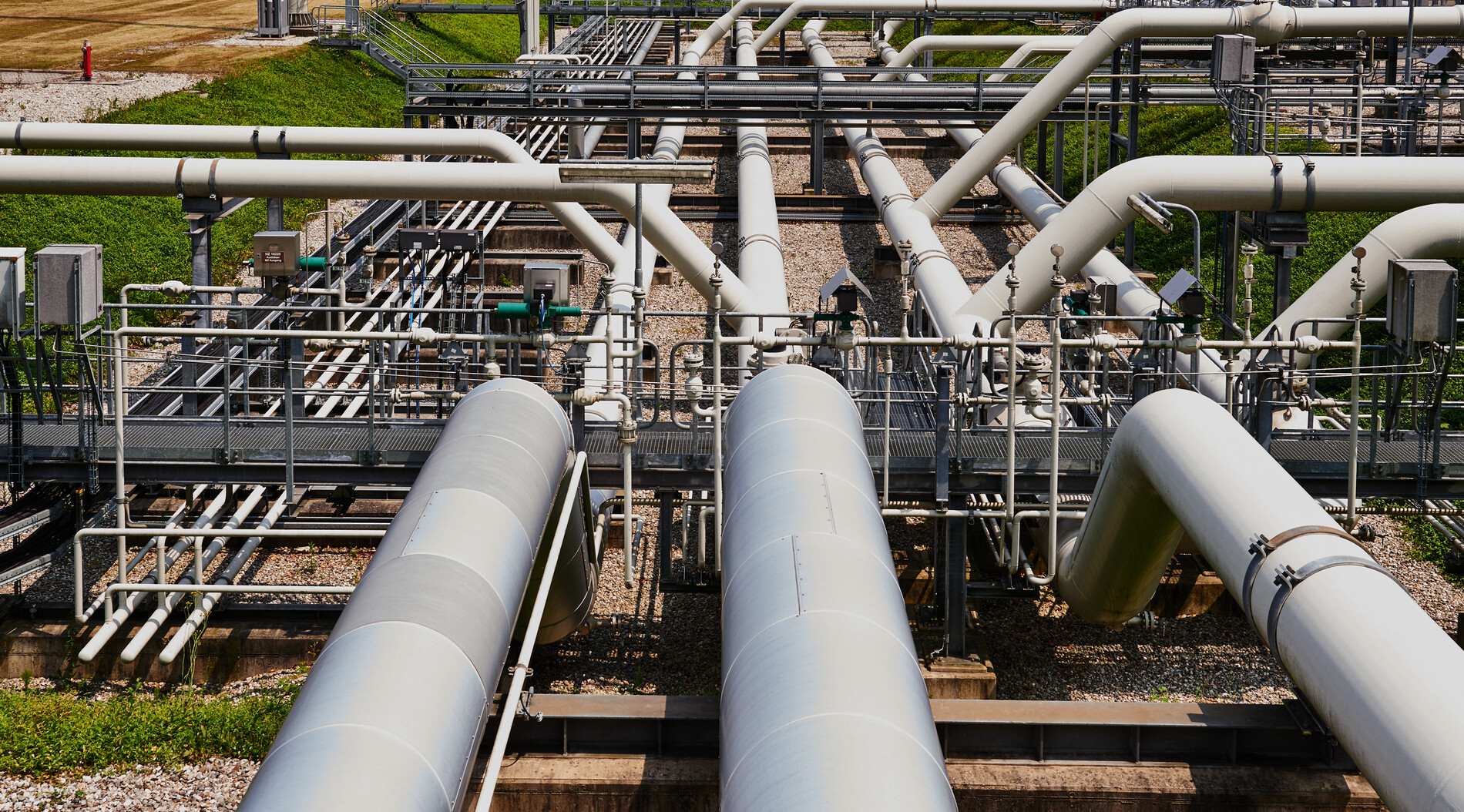


Hydrogen projects
As a transmission system operator, we are participating in numerous hydrogen projects and are thus making a considerable contribution to ramping up the hydrogen economy in Bavaria.
As part of this involvement, we are sharing in particular our expertise related to hydrogen transport and are exploiting decades of experience in developing and implementing larger infrastructure projects. In addition to this, many years of dialogue and cooperating with network customers means that we have developed a particular understanding for the needs of future hydrogen network users.
Below, you will find information on a selection of hydrogen projects that we are involved in:
HyPipe Bavaria – The Hydrogen Hub
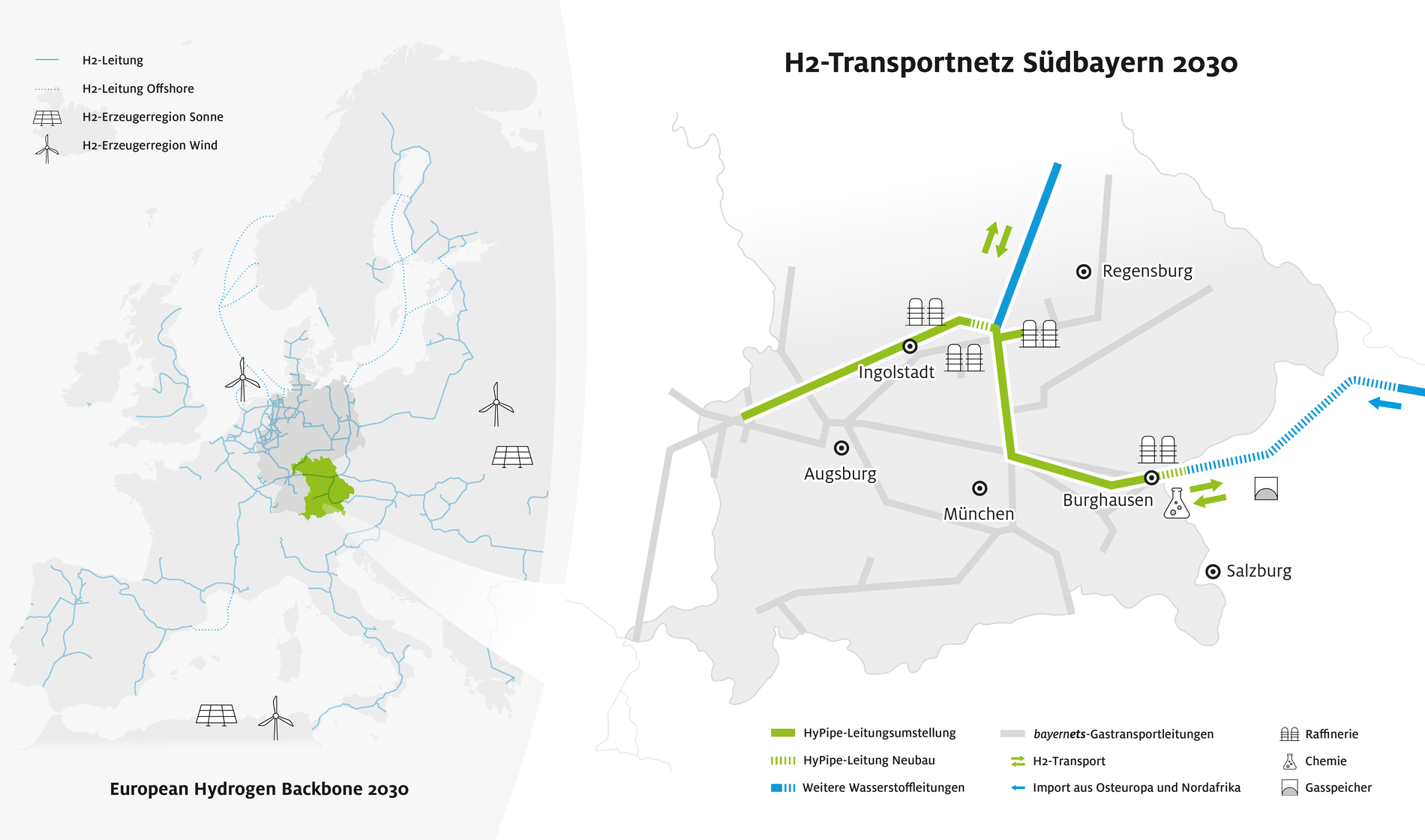
Our hydrogen start-up network for southern Bavaria.
We are paving the way for hydrogen imports to Bavaria and are shaping a hydrogen hub in southern Bavaria. The HyPipe Bavaria – The Hydrogen Hub project lays the foundation for a hydrogen start-up network in Bavaria by 2030, which will be implemented to 95 percent by repurposing existing natural gas pipelines. With approximately 300 kilometres, HyPipe Bavaria – The Hydrogen Hub is an integral part of the European Hydrogen Backbone, connecting regions with hydrogen demand to numerous potential production regions in Germany and abroad.
HyPipe one / H2 Cluster Burghausen
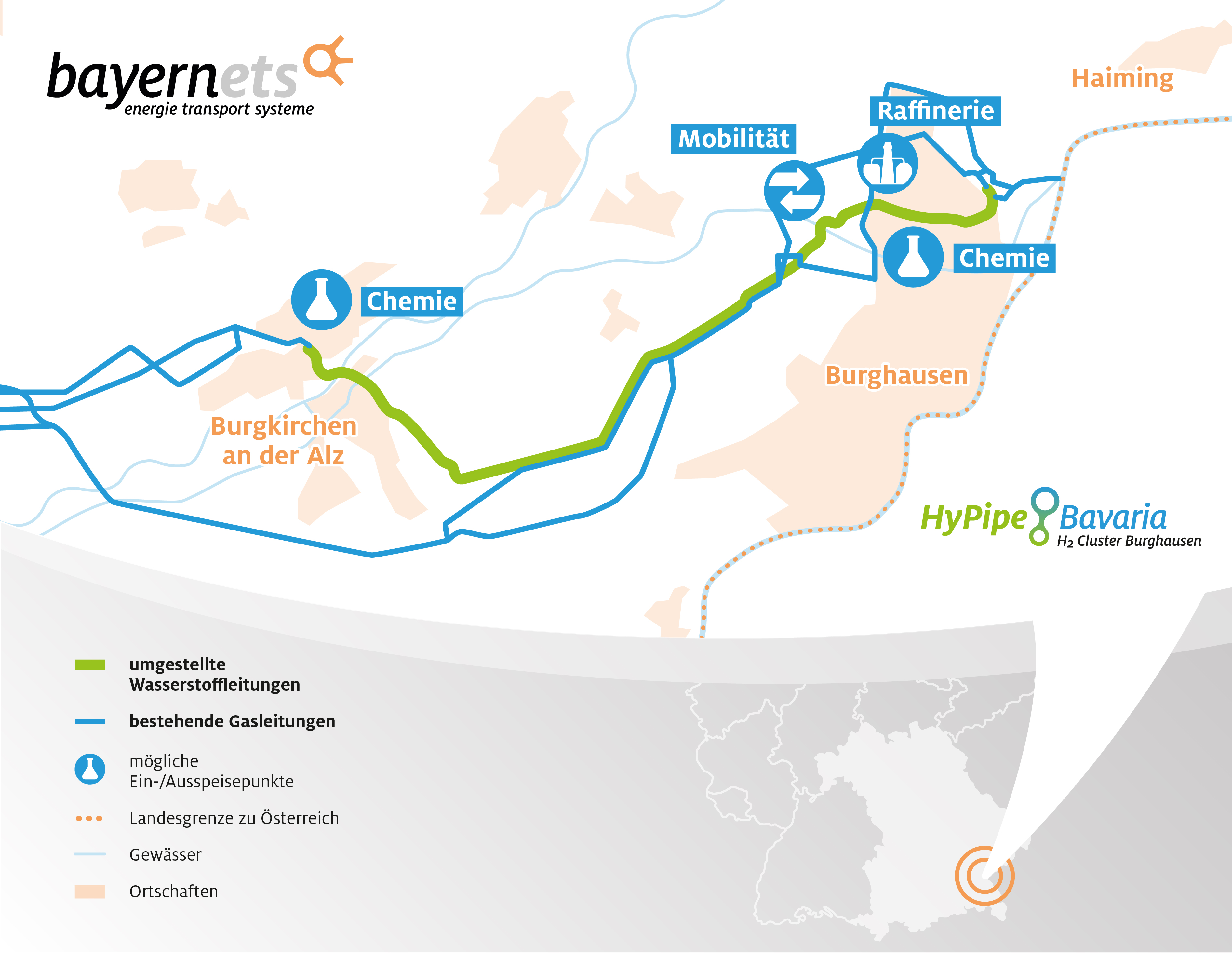
First hydrogen pipeline by 2026.
The declared goal is to set up the Bavarian Chemical Triangle as a starting point for ramping up hydrogen in the whole of Bavaria in the near future. We are currently implementing the first repurposing project in our network area there, with commissioning planned for the year 2026. A 15-kilometre pipeline-system is being converted to transport hydrogen, connecting hydrogen sources and sinks. Subsequently, the hydrogen network will be incrementally expanded and connected internationally. The Chemical Triangle currently has a natural gas demand of six TWh per year. Substituting fossil fuels means that the industrial customers in this region will require two TWh of hydrogen as early as 2030.
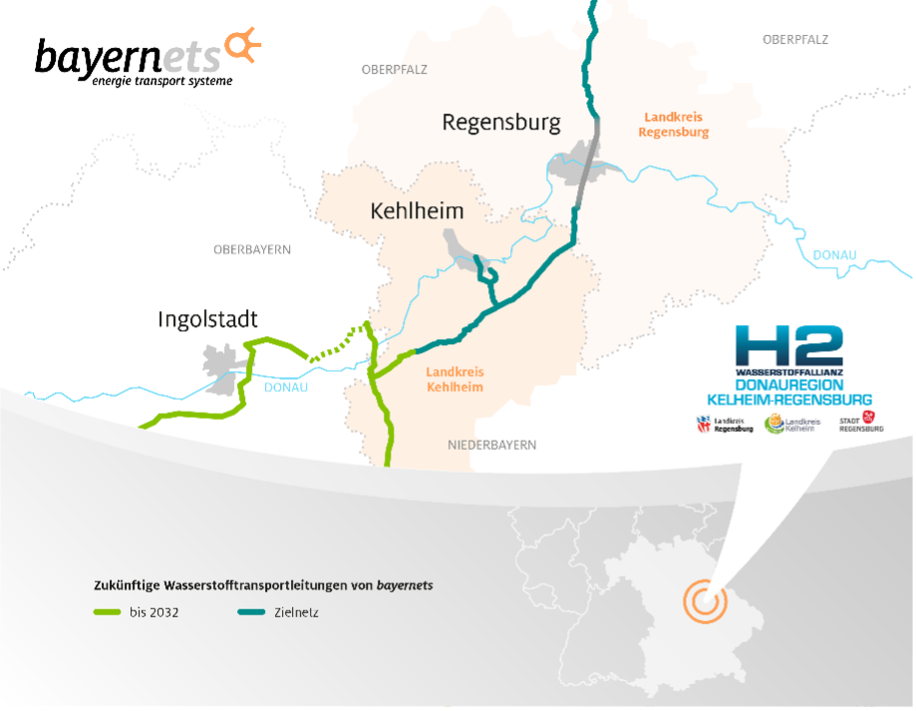
HyPipe Bavaria / H2 Cluster Kelheim-Regensburg
In the year 2023, leading stakeholders from industry, science and politics joined forces to set up the Danube Region Kelheim-Regensburg Hydrogen Alliance. Their aim: to pursue a common vision to develop a hydrogen infrastructure for the Danube region and to connect this region with the national hydrogen core network as fast as possible. bayernets is a co-initiator and partner of this Hydrogen Alliance.
Between July 2024 and January 2025, a hydrogen infrastructure study was drawn up with our participation to identify regional demand and potential for local production from renewable energy. The study results showed that even with an ambitious expansion of renewable energy sources, the demand for hydrogen in the region cannot be fully met. An external supply of hydrogen is therefore needed either by connecting to the hydrogen core network or via ports. Connecting to the German hydrogen core network is viable by 2035.
Participating companies (excerpt):
HyPipe two / Ingolstadt H2 Cluster
Ramp-up of a hydrogen infrastructure in the Ingolstadt region.
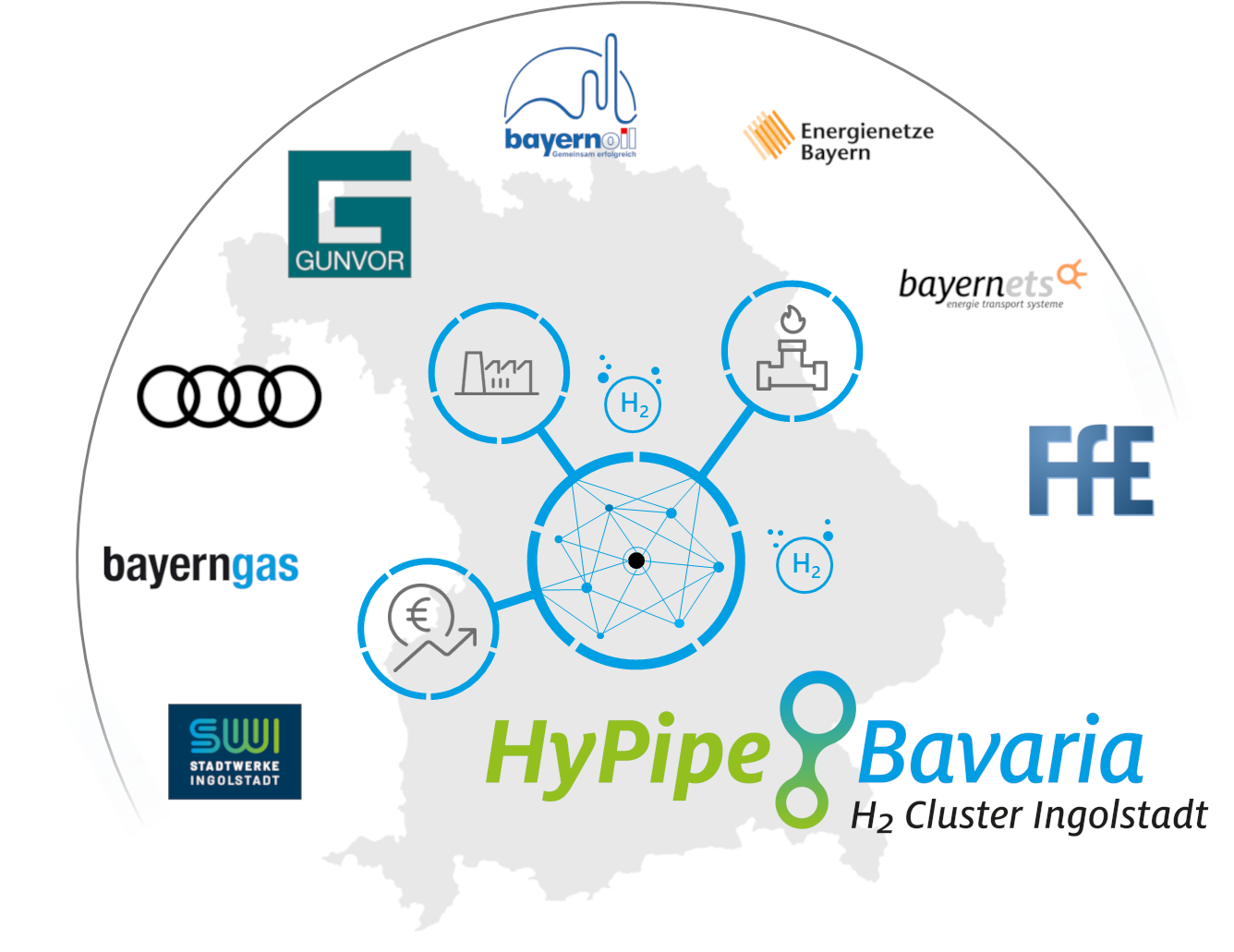
As part of the “HyPipe Bavaria / Ingolstadt H2 Cluster”, the consortium is planning to develop a hydrogen infrastructure in the Ingolstadt area to supply participating industrial sites and the region with hydrogen. Refineries such as BAYERNOIL and Gunvor as well as automotive manufacturers like Audi will soon be able to use sustainable hydrogen to decarbonise their production processes. The network operators bayernets, Energienetze Bayern and SWI Netze are important partners when connecting to the future hydrogen transport network by repurposing existing gas pipelines for hydrogen and developing a regional transport network to connect producers and consumers.
Participating companies:
BAYERNOIL Raffineriegesellschaft mbH
Energienetze Bayern GmbH & Co. KG
Gunvor Raffinerie Ingolstadt GmbH
Stadtwerke Ingolstadt Energie GmbH
Further information:
- „HyPipe Bavaria / H2-Cluster Ingolstadt“: Abschlussbericht
- „HyPipe Bavaria / H2-Cluster Ingolstadt“: Erfolgreicher Abschluss der Entwicklung einer Wasserstoffinfrastruktur für die Region Ingolstadt
- „HyPipe Bavaria / H2-Cluster Ingolstadt“: Beteiligte Unternehmen begrüßen den Vorstoß der Landesregierung, den geplanten Ausbau einer bayerischen Wasserstoffinfrastruktur mit Landesmitteln zu unterstützen
- Kurzfilm zum Cluster von en2x Wirtschaftsverband Fuels und Energie e.V.
- „HyPipe Bavaria / H2-Cluster Ingolstadt“: Unternehmen unterzeichnen Absichtserklärung für den Aufbau einer Wasserstoffinfrastruktur im Großraum Ingolstadt
H2EU+Store – Green Hydrogen for Europe
International industry partnership plans hydrogen ramp-up along the whole value chain.
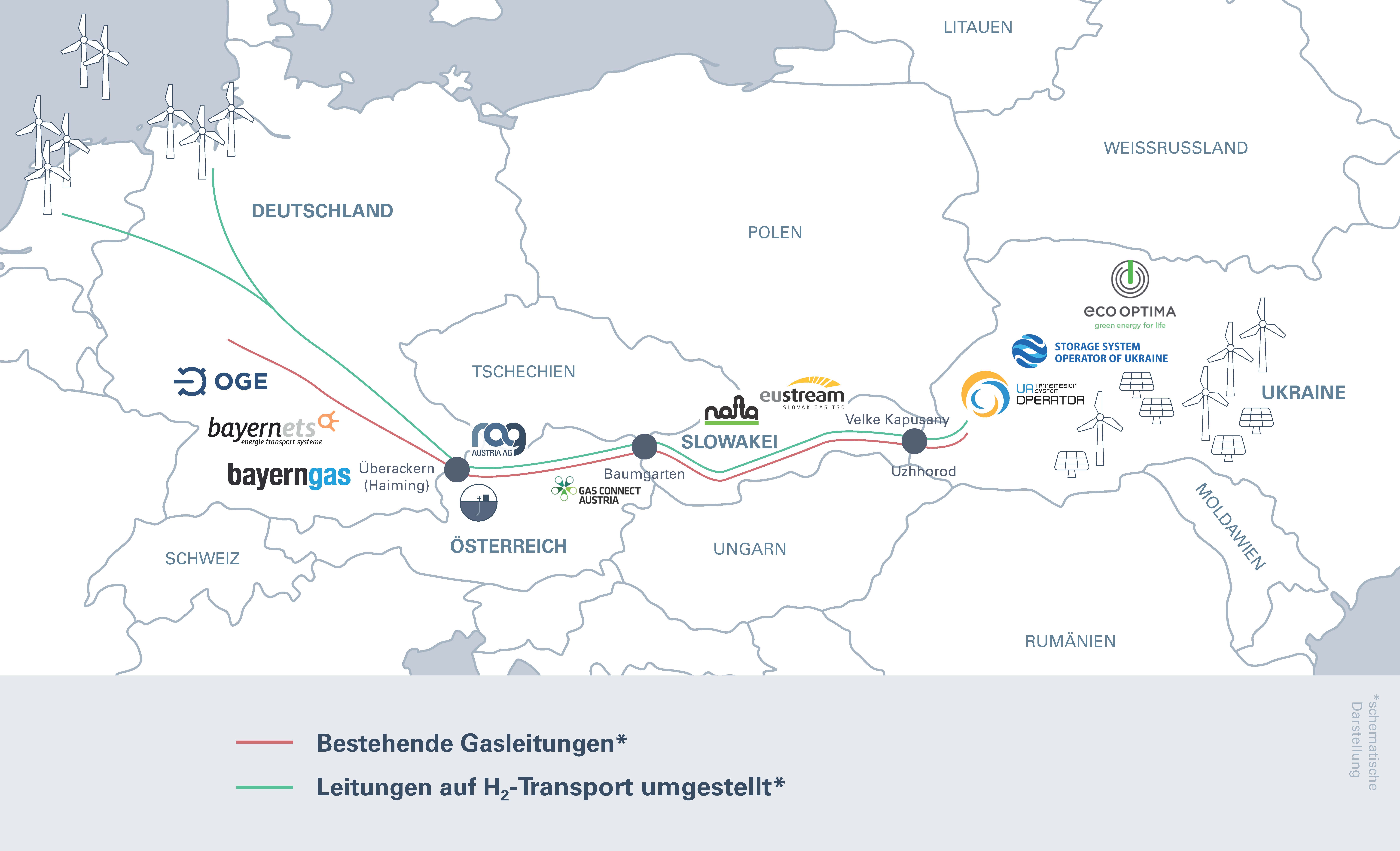
The “H2EU+Store” project is set up to create required capacities for producing green electricity and hydrogen in Ukraine on the one hand and on the other to increase storage volumes for hydrogen in Austria and Germany as well as make necessary adjustments to the infrastructure for the transport of hydrogen to central Europe. The participating companies drew up and developed the required steps.
Participating companies
International industry partnership consisting of:
Prospects
The “H2EU+Store” industry partnership is supporting the EU hydrogen strategy and is laying the foundations for the desired ramp-up of hydrogen utilisation in Austria and Germany.
Goals
In a phased plan set out up to 2050, green hydrogen produced in western Ukraine will be injected in what is for Europa significant volumes into the international gas transmission system of western Ukraine. It will then be transported via the gas pipeline systems of Slovakia and Austria to energy storage facilities in Austria and Germany and from there will continue its journey to central Europa.
You will find further information here.
Kernnetzplus - Core Network plus
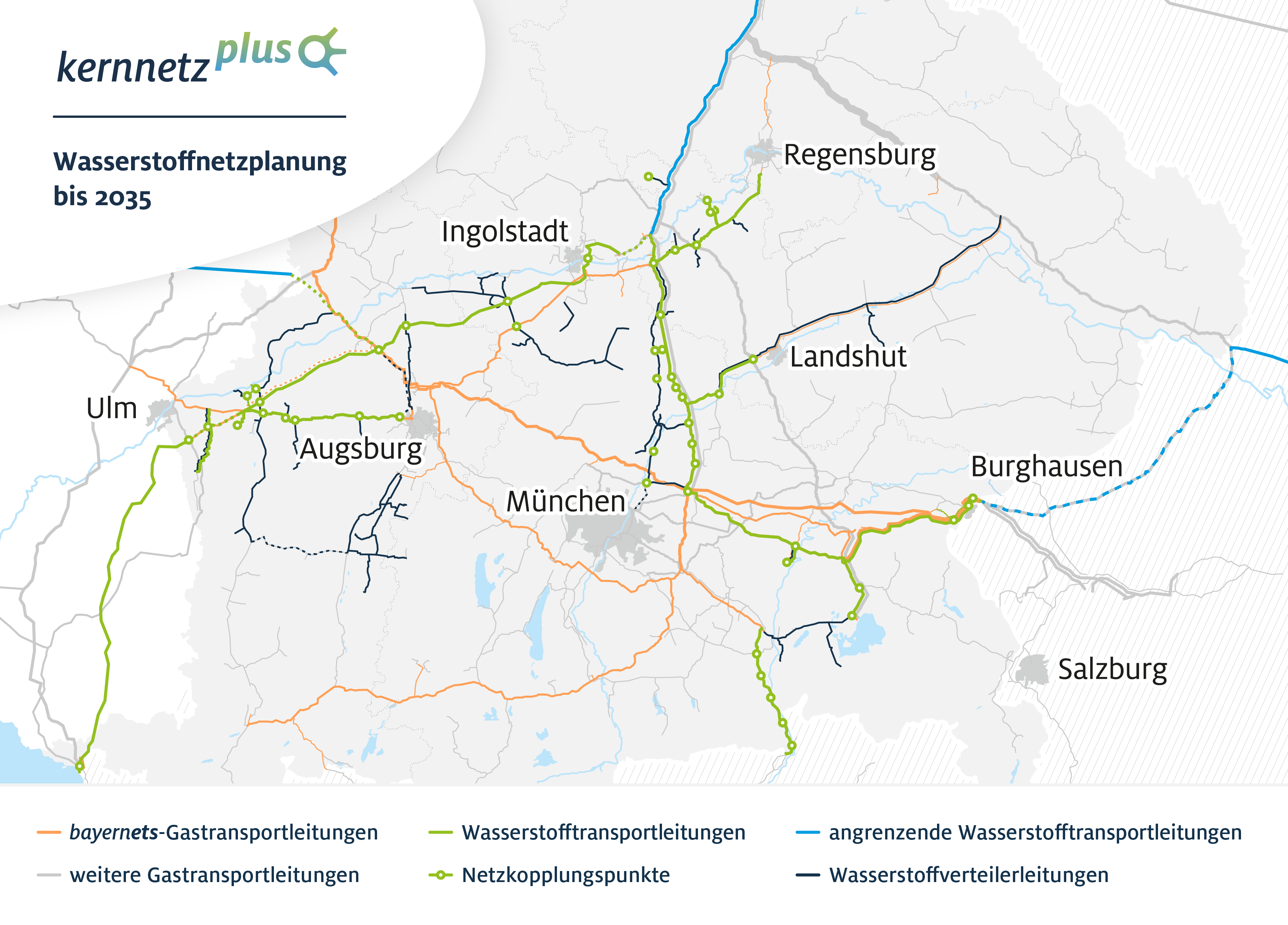
Together with distribution network operators from southern Bavaria, bayernets presented a synchronised concept for Bavaria's hydrogen infrastructure at the beginning of 2025. In October 2024, the Federal Network Agency had already approved the application submitted by the transmission system operators for Germany's nationwide hydrogen core network. While all German states and key industrial centres can be reached with the core network, additional hydrogen transport and distribution systems are required to reach every H2 high-demand region and urban area in Bavaria. A H2 network plan integrating regional/urban distribution networks that builds on the core network represents a further major step in creating planning security for the market.
The Kernnetzplus - Core Network plus – reflects plans for transporting and distributing hydrogen, developed taking into account existing infrastructure and demand for H2 in the region. With this cooperative approach among grid operators, we are setting the course early for a decarbonized economy and energy supply in Bavaria.
Considerations relating to the Core Network plus also provide for our international project initiatives by facilitating specific supply options for hydrogen imports to potential H2 consumers at an early stage.
This sends a strong signal to hydrogen customers and traders to synchronise their own strategies with each other and with infrastructure operators. With the help of specific pipeline plans, customers have additional arguments that enable them to make forward-looking decisions for their decarbonisation strategies. The whole concept is based on a common vision shared by the infrastructure developers and operators. What we now need is a joint development aim shared with the other market participants.
SoutH2 Corridor
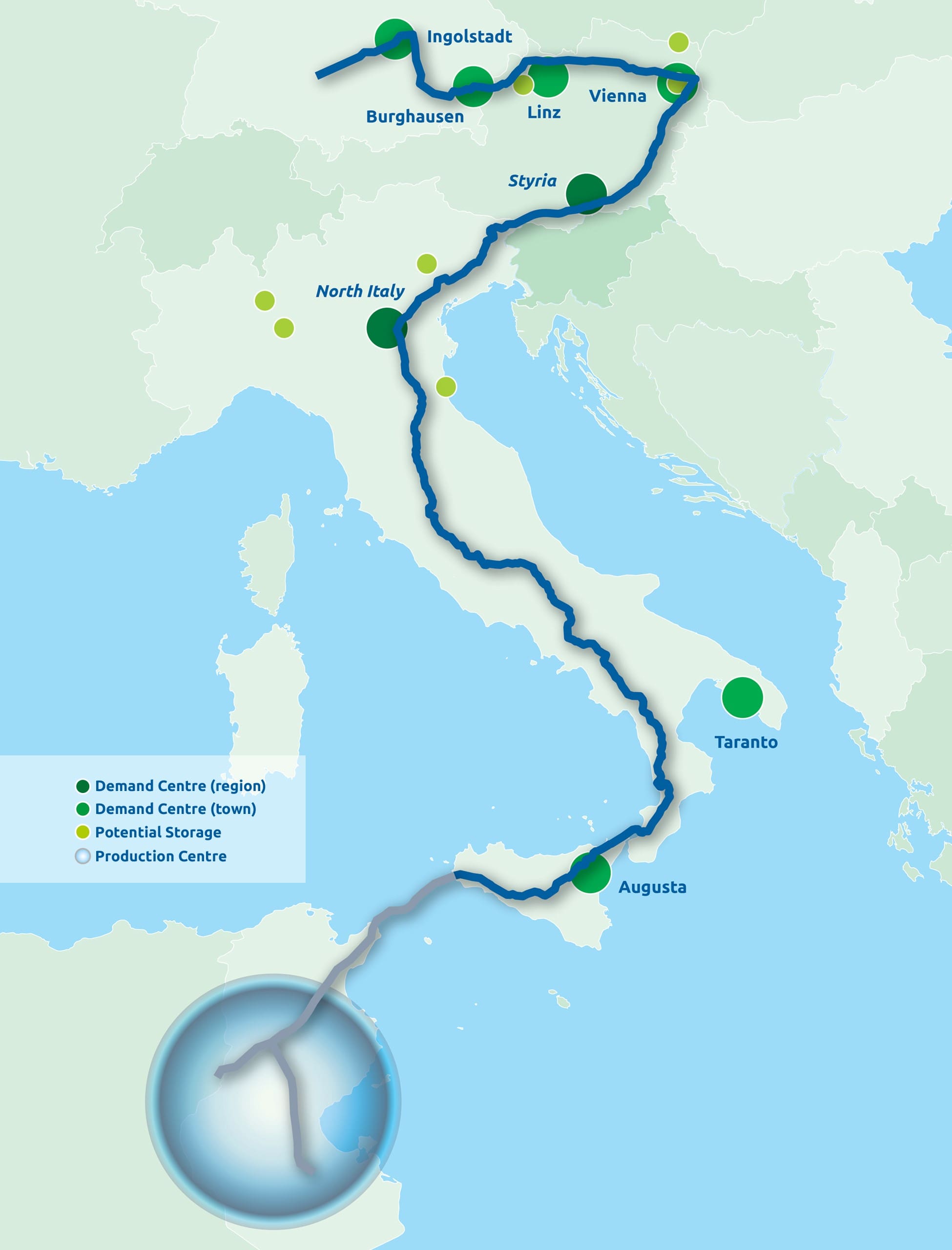
The SoutH2 Corridor initiative comprises an approximately 3,300 km hydrogen pipeline that connects North Africa, Italy, Austria and Germany. bayernets, GCA, TAG and Snam each submitted and had their own PCI pojects listed by the European Commission. Led by the four transmission system operators, the project aims to provide competitive, renewable hydrogen to European demand clusters.
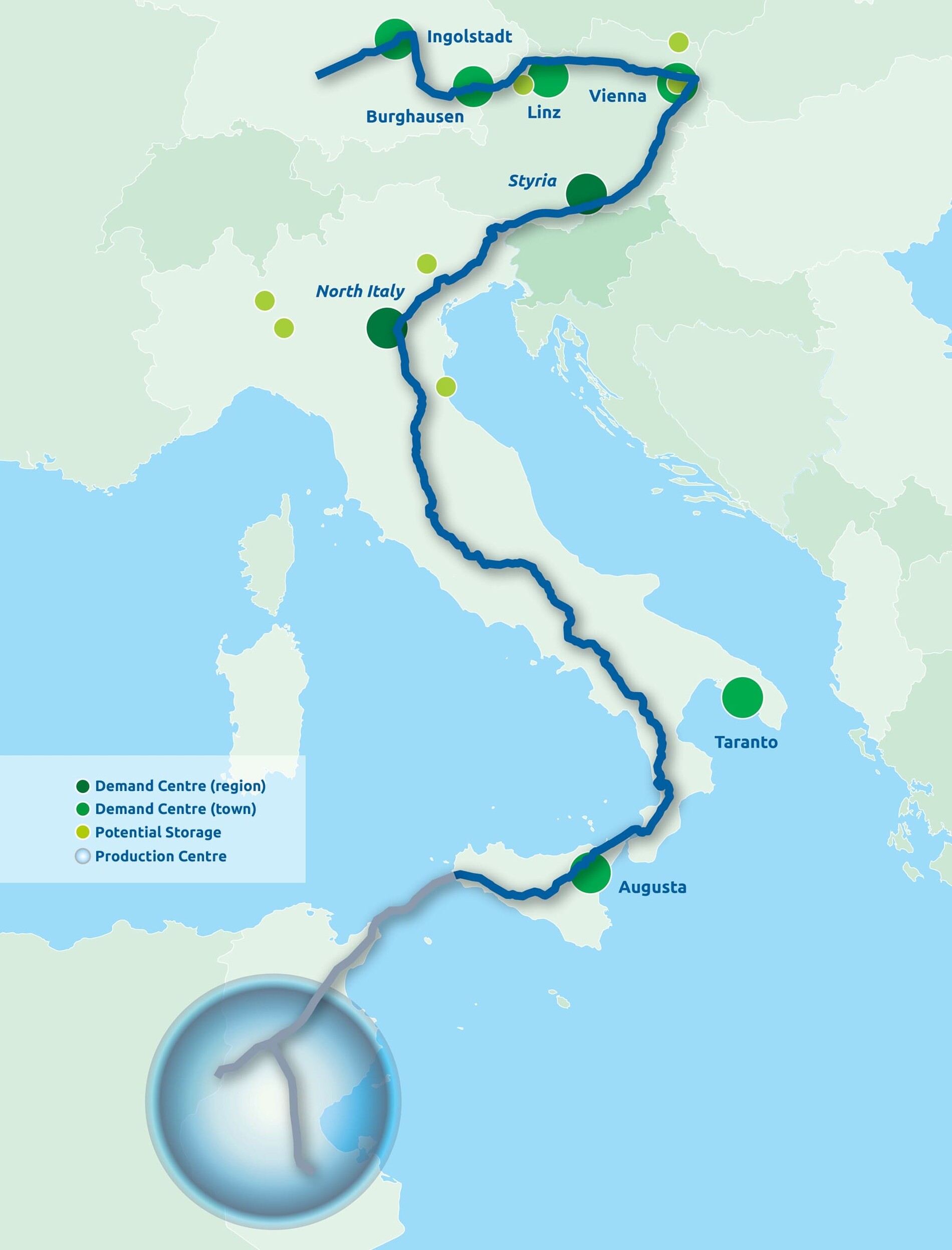
The corridor will have an annual import capacity of four million tonnes and consists of existing infrastructure to more than 65 %. It has gained pentalateral political support and strong interest from companies involved in producing and offtaking hydrogen along the whole corridor and plays a key role in the transport of imported and domestically produced hydrogen.
Source: https://www.south2corridor.net/