Energy Transformation in the Heart of Munich

Network Operator.
Infrastructure Developer.
Service Provider.

Step by Step Towards a Successful Transformation of the Energy System to a Fossil-Free World.

We operate one of the central transmission systems for gaseous energies in southern Germany and are pioneers in developing technically sustainable energy infrastructures. Our system-critical services ensure the supply of energy to our customers and partners.

News & Stories

23 June 2026 08:00 CEST

The prices and discounts for the points USP Haidach Entry, USP Haidach Exit, Haiming2-7F/bn Exit and Haiming 2-RAGES/bn in the price list of bayernets for the 2027 tariff period have been partially adjusted. 

15 June 2026 17:00 CEST

Due to IT maintenance works on 16 June 2026 from 11:15 - 13:30 CEST auctions and FCFS bookings with bayernets on the PRISMA platform will unfortunately not be possible. We kindly ask you for your understanding. If you have any questions, please contact market@bayernets.de. 

Pressemitteilung

New uniform postage stamp tariff for the Trading Hub Europe (THE) market area from 1 January 2027

For the Trading Hub Europe (THE) market area, the transmission system operators have determined the uniform tariff from 1 January 2027 on the basis of the Federal Network Agency’s REGENT 2026 decision.

The annual tariff for firm, freely allocable entry and exit capacity will be 7.31 EUR/(kWh/h)/a,…

Gas Transmission Dashboard

Information about capacities, load flows, nominations, interruptions, calorific values and Wobbe Index at the relevant entry and exit points of bayernets.

To the dashboard

Key Metrics

Our Origin
0
Our Founding
0
Our Transmission System (km)
0
Our Contribution to the H2 Core Network (km)
0
Our Team
0

Team

Dirk
Dispatchig

In the control room, he works alongside his colleagues to manage large volumes of energy with precision, taking responsibility around the clock for ensuring a secure and reliable energy supply.

Simona
Public & Regulatory Affairs Europe

She combines technical expertise with a broad strategic perspective, driven by the goal of helping to shape the energy supply of tomorrow.
Tobias
Network Operations Manager

Four questions, four personal insights: Why is this work so important for the energy supply of today and tomorrow?

We are future-proofing the supply of energy.

We are working towards successfully transforming the energy system and are developing our part of the German hydrogen core network step by step.

In the transformation phase, it is our task to ensure the secure supply of gas while simultaneously preparing for a future hydrogen supply. This is what we are building!

To make sure that a sufficient supply of hydrogen is available in the future, additional import options are required. We provide a key import point at the German-Austrian border through which hydrogen can be fed into the German core network. As a trusted partner in politically backed initiatives to establish European import corridors, we are implementing solutions for hydrogen customers in southern Germany and Europe.

Curious about our Projects?
Gas Transmission Pipeline AUGUSTA
Gas Transmission Pipeline AUGUSTA

In 2025, we built the 40.5 kilometre AUGUSTA gas transmission pipeline in the west of Augsburg. At the starting point, the compressor station in Wertingen, and at the endpoint, the Kötz network node, the AUGUSTA pipeline is connected to our existing gas transmission system. This enables new gas-fired power plants as well as Baden-Württemberg to be connected to gas storage facilities in the southern Bavarian and Salzburg areas as needed. The pipeline is H2-ready, which means it can transport hydrogen in the future if required.
HyPipe Bavaria – The Hydrogen Hub

HyPipe Bavaria – The Hydrogen Hub

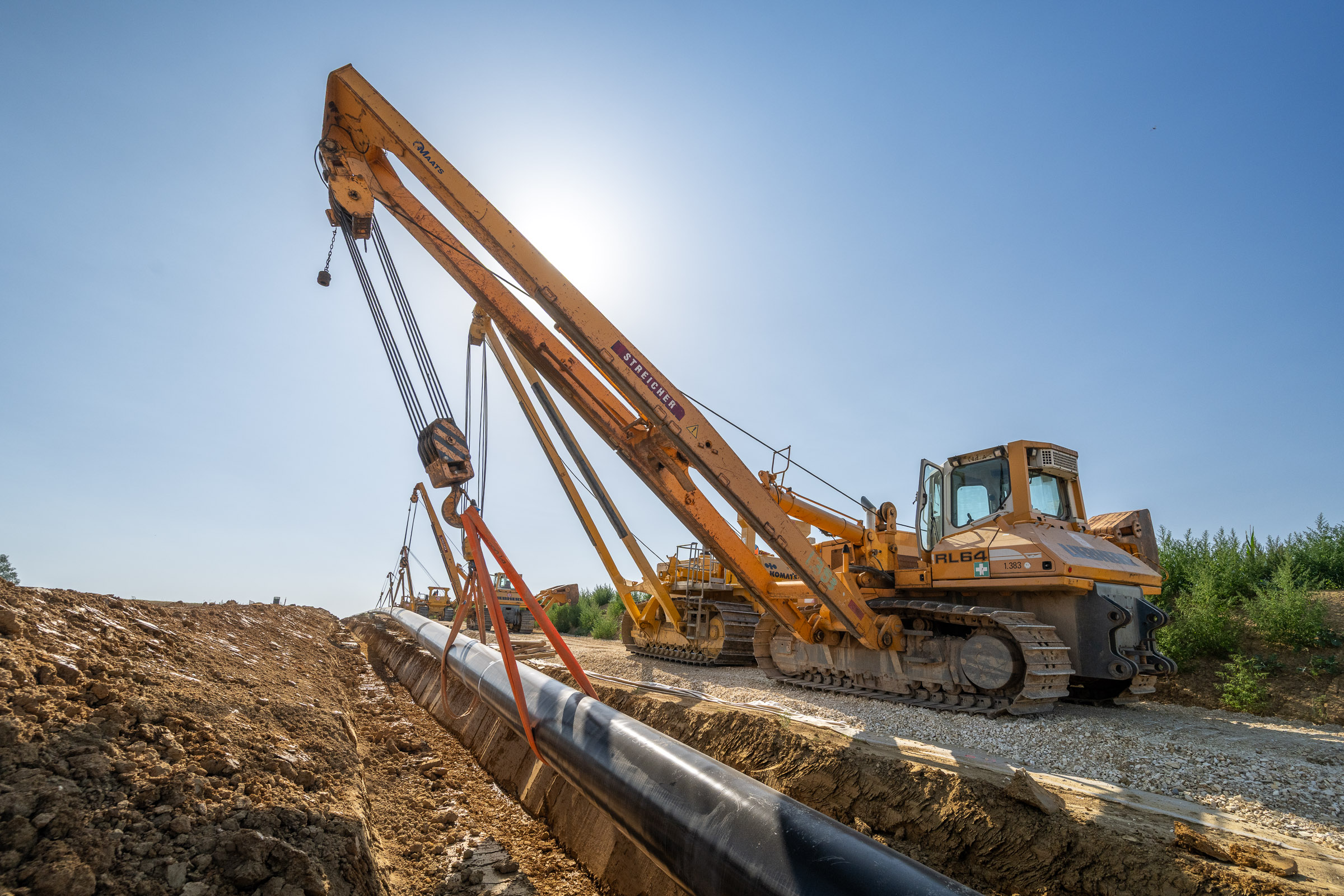
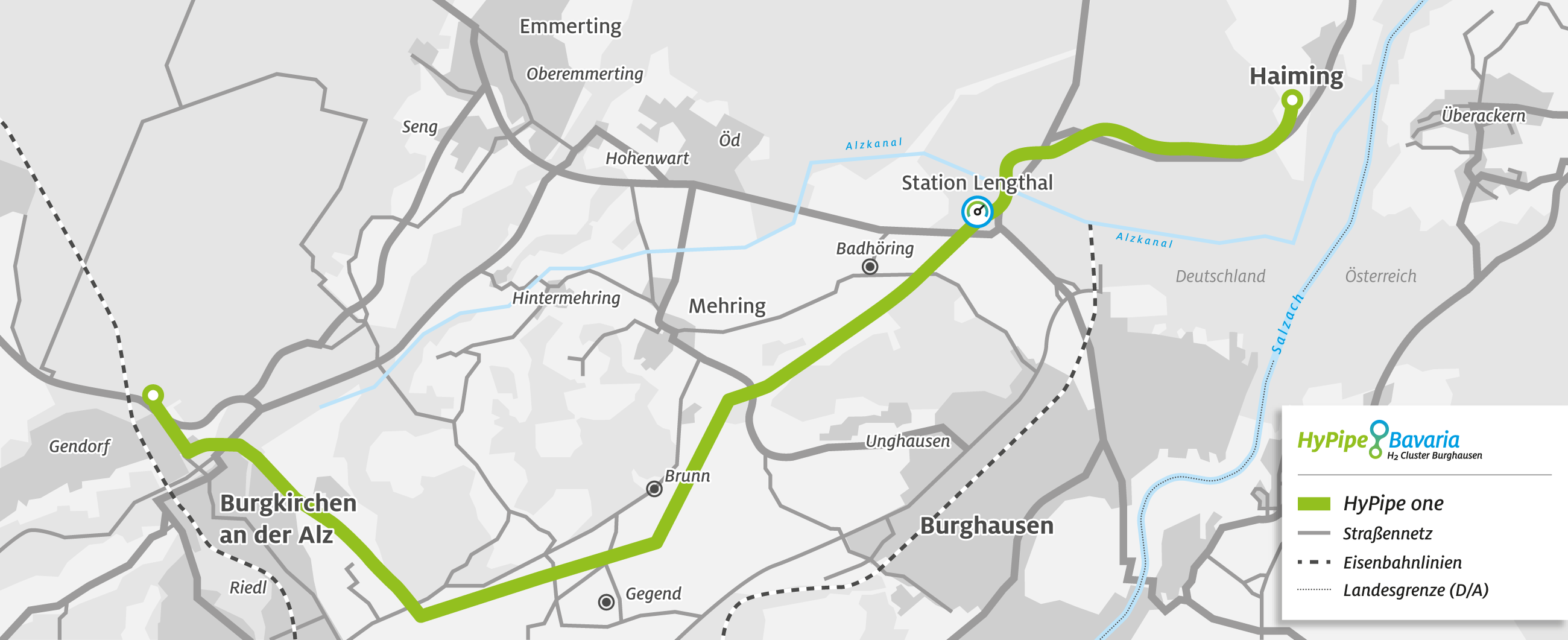
HyPipe Bavaria – The Hydrogen Hub is a Project of Common Interest (PCI). With this project, we are creating the conditions required to import hydrogen through our interconnection point Überackern. With this connection to the Austrian network system, we are opening the gateway to future hydrogen sources from the south and southeast. Hydrogen can then be transported through Bavaria into the national hydrogen core network and further to other European countries. The first pipeline section, HyPipe one, is currently being constructed in the Bavarian Chemical Triangle and will be hydrogen-ready in 2027. HyPipe one forms part of our contribution to the national hydrogen core network. The PCI project also supports our common SoutH2 Corridor initiative, the aim being to transport green hydrogen from North Africa through a southern corridor to industrial clusters in Bavaria and onward into the German core network.
Kernnetz<sup>plus</sup>

Kernnetzplus

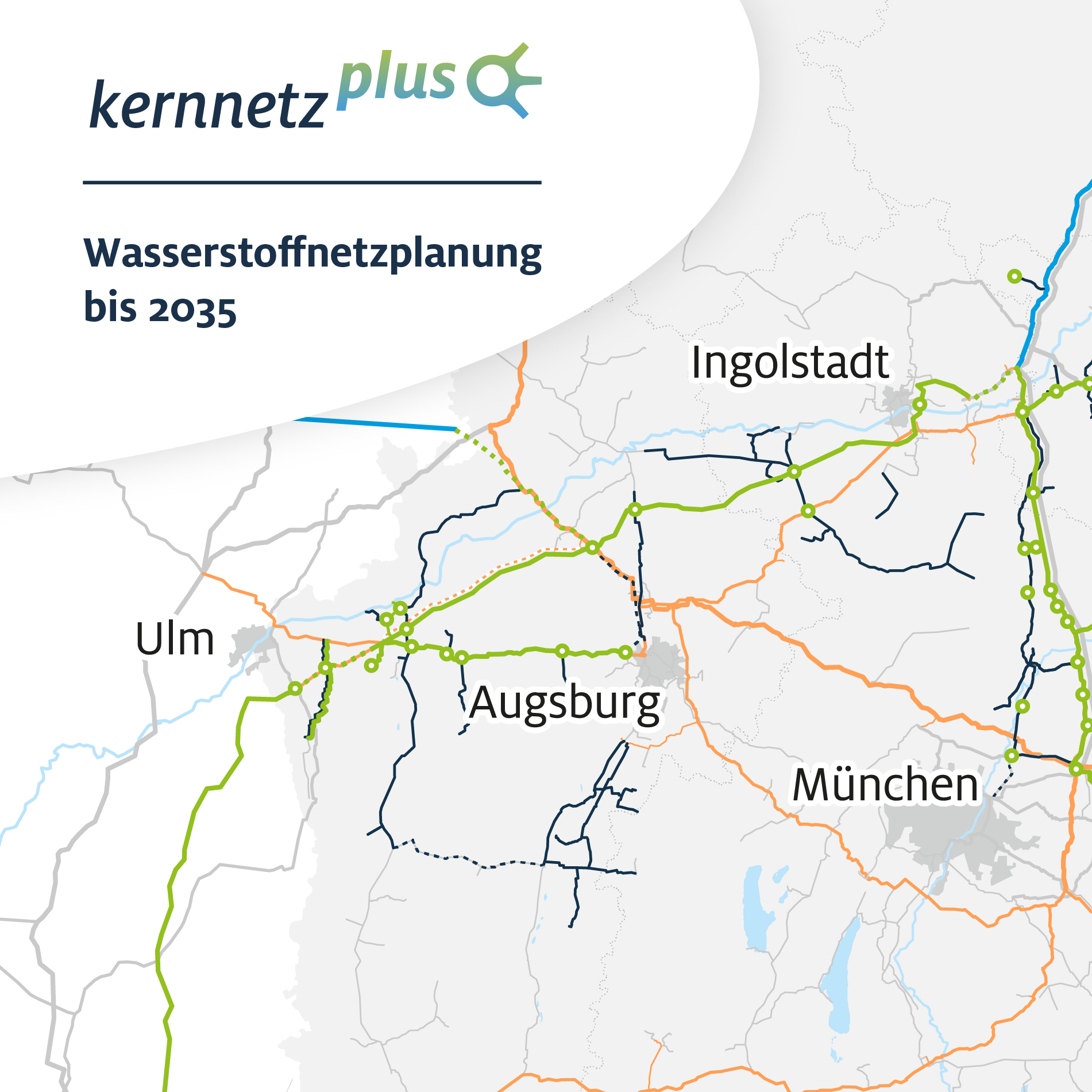
Energy infrastructure companies are developing a hydrogen core network for Germany, to be completed by 2032. The national core network lies at the centre of the European Hydrogen Backbone. We are currently building the southern Bavarian part of the national core network with regional clusters and our PCI project HyPipe Bavaria – The Hydrogen Hub will provide a European gateway to import corridors in the southeast such as our joint SoutH₂ Corridor. To make sure that hydrogen also reaches a wider area, high demand regions and metropolitan areas, we have launched a joint Kernnetzplus (Core Network Plus) initiative together with regional and municipal distribution system operators. Curious to know more?
co₂peline

co₂peline

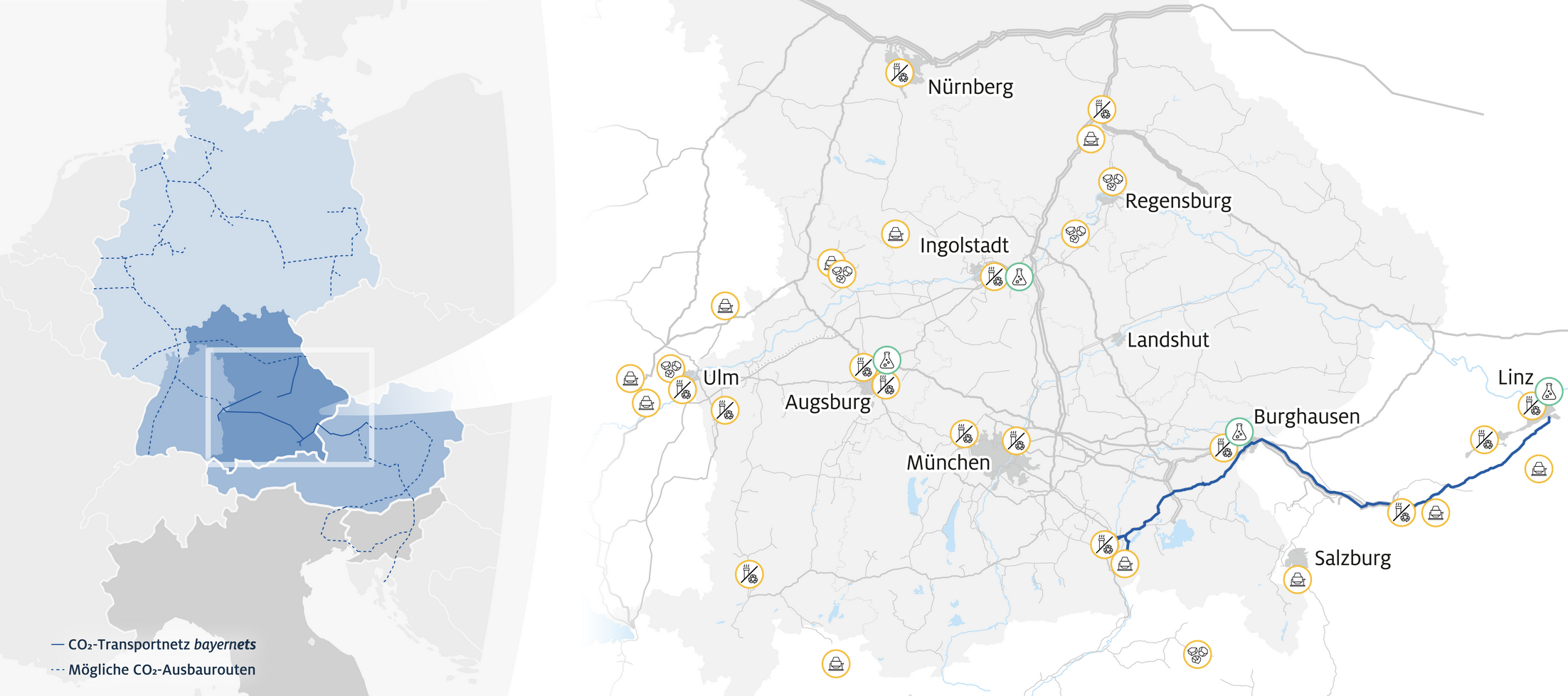
Companies in Bavaria are pressing ahead with the decarbonisation or defossilisation of their production methods and processes. Some industries, however, continue to generate process-related emissions that are difficult or impossible to avoid. Parallel to this, CO₂ is needed as a raw material in certain specialised sectors. bayernets is an energy infrastructure provider for the pipeline-based transport of natural gas, biomethane and hydrogen. As an infrastructure specialist, we are also developing transport solutions for unavoidable CO₂ emissions with the co₂peline project and are thus contributing part of the answer to this challenge facing society and those developing industrial policy.